Populations in major urban areas around the world have steadily increased on an annual basis over the last century. Historically, this increase was the result of the industrial revolution in Europe and the subsequent growth of new industries year after year. To feed this growth, raw materials were needed to power the machinery and create the goods and products that were needed to satisfy the demands of growing populations. Naturally, the byproduct of these undertakings was an enormous amount of waste. In many cases, this waste proved to be harmful to human health.
For many years, waste was left untreated or ignored before individuals around the world began demanding that some action be implemented to protect the health and wellbeing of all members of society. It may have taken years of lobbying and the creation of awareness among the general populace, but the concern in developed countries evolved to such a degree that business and political leaders finally began implementing environmental protection systems for the benefit of all.
At KOC, Company officials have long understood the importance of sustainable and efficient containment of waste that is generated in Ahmadi and within the Company’s areas of operation. As a result, KOC has worked hard to help preserve and protect Kuwait’s environment, which is one of the Company’s top priorities. This later gave rise to the creation of KOC’s Environmental Waste Management Program, a pioneering project for Kuwait and KOC which was born out of the recognition of the importance of environmental custodianship.
In the article that follows, we will learn more about the aforementioned project and the recycling center that was constructed with the aim of lessening the Company’s impact on the environment. Additional information will be presented that provides an overview of recycling, including its procedures and advantages.
Methods and Procedures
Various methods and procedures have been adopted by countries around the world to eliminate waste that posed a threat to their environments. One way to tackle the issue of waste is by disposing unwanted material in landfills. Another includes burning the waste in incinerators. Other methods have included discarding waste in open landfills, or, far worse, dumping the waste into rivers, lakes, seas or oceans.
In reality, none of the methods previously mentioned provide an adequate or real solution to the problem of waste. In all of the scenarios mentioned, there is a significant impact on the natural environment. Moreover, permanently disposing unwanted materials provides an additional environmental cost: more natural resources must be used to create new goods. This poses a significant threat to future generations, and humans today run the very real risk of depleting certain natural resources. This is where the excellent benefits of recycling come into play as a solution to this dilemma.
Recycling involves the treatment of consumed materials in order to bring them back to their raw form before repurposing them so that they can be used again. The recycling process is an alternative to conventional waste disposal and can help save materials and lower greenhouse gas emissions. Recycling can prevent the waste of potentially useful materials and reduce the consumption of fresh raw materials, thereby reducing energy usage, air pollution (from incineration), and water pollution (from landfilling).
Recyclable materials include many kinds of glass, paper, cardboard, metal, plastic, tires, textiles, and electronics. The composting or other reuse of biodegradable waste - such as food or garden waste - is also considered recycling. Materials to be recycled are either brought to a collection center or picked up from the curbside, then sorted, cleaned, and reprocessed into new materials destined for manufacturing.
Japan, for example, is a pioneer in terms of recycling, where the recycling culture is common among its citizens. In Japan, and other countries with advanced recycling programs, recycling starts by sorting waste in houses, schools and governmental institutions. The waste is then sent to companies that specialize in reprocessing the raw materials, and those companies, in turn, will achieve profits while also helping citizens profit by not having to pay a compulsory tax on waste they do not recycle.
Different Benefits
Recycling aims to preserve the environment – this is the main goal. It aims to protect the environment from the risks of burning the waste, burying the waste or keeping it uncovered. This will eventually contribute to less pollution of the oceans, seas and rivers from the solid waste thrown into it that threatens marine life. It also lessens the pollution in subsurface water formations from the waste seeping down after it is buried.
Recycling also contributes to preserving the air from waste flaring, which contains toxic emissions and carbon dioxide that increases the problem of pollution. Recycling also has economic advantages because recycling will diminish the demand for raw materials. Subsequently, the raw materials will last longer and be available for future use. Recycling also saves energy that is used to extract raw materials in the first place. On the whole, recycling cuts overall energy demand; for example, it is much easier to repurpose a ton of plastic than it is to produce a ton of plastic from raw materials.
Recycling at KOC
Studies indicate that Ahmadi produces approximately 25-30 tons of waste daily, and this is out of 2,500 tons of the total waste production in Kuwait. Recent studies indicate that Kuwait is one of the largest producers of waste in the world per capita, with most of this waste going to Kuwait Municipality landfills.
Within this context, KOC has refocused its attention on environmental protection by dedicating a significant amount of money, time and energy into developing the Environmental Waste Management Program for KOC residences and offices in Ahmadi.
This project took more than 10 years of research, study and experimentation until it reached its form today as an integrated system that helps preserve the environment by adequately disposing of and eliminating the risks associated with home and office waste. The project includes the transport, sorting and primary treatment to transform these materials from undesired waste to raw materials that support local industries. In addition, this pioneering project was awarded UN recognition. The UN is a major supporter of environmental preservation systems and projects, and the recognition by the UN has done much in the way of bolstering confidence in this important KOC project.
Recycling Center
The project, which falls under the purview of the Road and Support Team, aims to decrease the amount of waste by repurposing disposed materials in a proper way. Therefore, the Company has enacted a number of procedures and methods that will enhance the recycling culture and implement best practices in accordance with effective procedures used around the world.
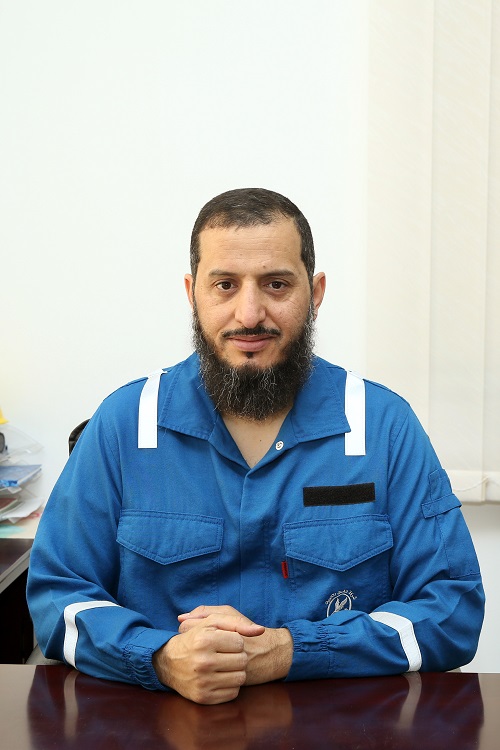
As part of work being conducted to achieve those objectives, the Team recently inaugurated a center to receive waste in Ahmadi. We toured the center and were guided by Building Maintenance Supervisor Nasser Al-Hajri, who helped explain details related to the new center and the procedures applied in sorting operations and other special modern methods related to the project. It is worth mentioning that the first beneficiary of this project that has been under construction since 2004 is the citizen. One of the goals of the project is to help KOC meet its objectives as they relate to environmental protection and custodianship.
Sorting Methods
Sorting methods at the center depend on the awareness that the consumer has about his role in implementing this operation. This happens through the utilization of the bins that the Company distributed to offices and KOC houses which consist of four different types, in addition to a paper bin that exists in offices. The first phase of sorting solely depends on KOC employees and their families by sorting waste in the proper bins. Wrong sorting of these materials, whether it is paper, glass, metal or food will lead to the damage of these products and the inability to recycle them.
Afterwards comes the second phase, which is the responsibility of the specialized team whose role is to collect the waste from the distributed bins and transfer it to the recycling center in the city. Then, it must be ensured that sorting has been done properly so that waste can be transferred to the contractor in charge of recycling and environmental treatment of the products and materials.
Smartcard
The recycling center works in conjunction with an electronic system where the residents of KOC homes have an electronic smartcard that contains all data related to them. This card will allow for communication with residents and will help verify their commitment to the project. It also allows the team and the resident to know the interaction level and the waste amount that has been maintained since the launch of the project. Furthermore, this smartcard enables the Road & Support Team to determine the different contributions of KOC home residents in the recycling project in order for the team to distribute gifts and awards to the most organized residents. This initiative aims to encourage KOC employees and KOC home residents to sort waste properly and contribute more, which will result in a recycling culture in the city.
Awareness Campaigns
The Team in charge of this project is keen to enforce the recycling culture among KOC employees and KOC home residents through a number of successive awareness campaigns that aim to focus on the importance of proper waste sorting and placement in the proper bins.
This campaign doesn’t only target KOC employees and home residents. Instead, the Team began to also conduct seminars and distribute awareness brochures in Ahmadi schools, especially after setting aside a number of bins and smartcards to the schools to include them in major environmental project. Furthermore, the Team conducted a competition among participating schools in implementing this project and granting awards accordingly.
Statistics:
• Each plastic ton received by the recycling center allows for 700 kilograms of raw oil to be saved.
• Each ton of received of cardboard helps spare 2.5 tons of wood.
• Each piece of received paper saves a liter of water in addition to 2.5 watts per hour of electricity
and 15 grams of wood.
Message from the Team Leader
Team Leader Road and Support Abdual Aziz Al-Otaibi said that the Environmental Waste Management Program falls under the context of KOC’s concern for the environment and its keen efforts to preserve it. The Company, he said, considers this undertaking a humanitarian duty for future generations, as protection of the environment will ensure Kuwait remains a safe oasis that is free from the dangers of pollutants.
Al-Otaibi also pointed out the importance of the role of KOC employees and Ahmadi residents, as they are the cornerstones in implementing this project that aims to draw on best practices related to the integrated management of waste and recycling. He also added that one of the future plans pertaining to this project is to share this experience with all Ahmadi facilities in order for them to allow Ahmadi to be looked upon as a model city in terms of waste management and recycling.