What is a Software License?
A software license can be defined as a contract and/or legal binding between the creator (owner) of a program and the user of such a program. A user should not use a software program without the consent and agreement of the owner of the software.
Other than programs/software that are given free of charge, all usage of any program/system/software are required to be licensed. The user should pay a fee to the owner who invented/developed the program. The program is the proprietary of the owner, and it is a copyright that is protected by law against illegal usage.
Major Providers of Licenses for Corporate Information Technology Group (CITG)
CITG deals with many providers of licenses in order to run KOC’s business and software computing requirements. The following are CITG’s major providers for our corporate applications and software:
1. Microsoft
2. Oracle
3. IBM
CITG spends millions of dollars to purchase and maintain software licenses. CITG devotes time and effort in order to stay as much as possible in compliance with the number of licenses purchased compared to the number used.

Challenges
Licenses are difficult to manage due to the many challenges a user can face in the interpretation of a license. Here are some of the challenges we experience in order to keep up with compliance:
1. No Software Key
A legally purchased software application can be installed without any restriction and without embedded software key to prevent the installation. This will eventually result an in “out of compliance” situation. Out-of-compliance can occur whether it is over or under usage. Imagine purchasing 100 licenses for a specific program and because there is no key for each license installed, we may install more than the allowed limit (100 licenses). In order to be in compliance with our agreement with the owner/provider of the software, eventually we should purchase the extra licenses (the difference between what we are utilizing minus what we have purchased).
Note: Some of our technical software licenses come with digital keys. Each user should use a different digital key in order to access the software. We cannot exceed the number of keys purchased.
2. Too Many Agreements
In order to use specific software, the user should sign a license agreement with the software provider. However, most of the software providers create many agreements for different products and modules. The user should figure out what agreement suits him best, both technically and economically. The software provider’s technical representative should help the user figure out the number of licenses to use, the model to be used and the type to be adopted. However; the job of the representative is to sell more licenses, and accordingly, intentionally and not intentionally, would not thoroughly explain the licenses policies to the potential user.
3. Policies for Backup & DR License Rights
Backup, Disaster Recovery, Standby, and even Testing and Development licenses are usually treated different than Production and Live Licenses. Such licenses should cost less than Production Licenses for many of the products. It is for the user to thoroughly understand the licenses policy provided by the licenses’ provider by asking questions, challenge the interpretation and request extra discounts. Such policies are complicated to understand and contains a wide range of information that is sometimes hard to follow. In general, a user gives up understanding such complex and long readings of licenses policy and then reverts to a sales representative for an explanation.
Types of Licenses
There are many types of licenses in the market, and each provider has his own naming, description and interpretation. However, the following are the major licenses:
Perpetual Licenses
Licenses are purchased without expiration dates. This permits the user to utilize the software indefinitely, without requiring a recurring fee for such use.
Examples include software for use on home computers, which are perpetual licenses.
Non-Perpetual Licenses
These licenses allow the user to use the software for a specified period, usually yearly. Users are required to remove the software from their computer once the period has expired or if they decide not to continue paying the license fee.
License with Maintenance
Some license agreements allow the user to purchase “maintenance” or “software assurance” along with the original license fee, which entitles the user to receive new versions of the software for one to two years until the maintenance agreement expires. These licenses are “perpetual” as long as the maintenance fee for the licenses is paid on time and there is no interruption of payment. The yearly maintenance fee is a fraction of a percent of the purchase price and in general, it is increased by 3 to 5 percent on a yearly basis. Once the maintenance payment is stopped for a period specified by the owner of the license, the user should rebuy the licenses again. Therefore, it is very imperative that maintenance fees are always paid on time and without any stoppage.
The fee that is paid for maintenance entitles the user to all software patch releases, hot and bug fixes, security releases and software upgrades. It allows the user to have access to the vendor’s on-site support to report problems and faults and even low performance of the software. The vendor will provide a solution to a bug and allow the user to access a database of knowledge sharing in which users report problems they have faced and provide the different solutions and approaches to the problems. Such knowledge-sharing databases contain a wealth of tips, information and tools that can be beneficial to its members and customers.
License Models
Generally, there are two major models of licenses. One that deals with users, called User-Metrics, and the other that is used to license hardware resources, called Capacity-Based Metrics, like processors and cores.
User Metric
The main licenses for a User-Metric is either Authorized User or Concurrent User. In an Authorized User metric, the number is straightforward, one license for one user. For example, a company acquires 1,000 licenses for 1,000 employees and the company will only use 1,000 licenses and should not exceed that number.
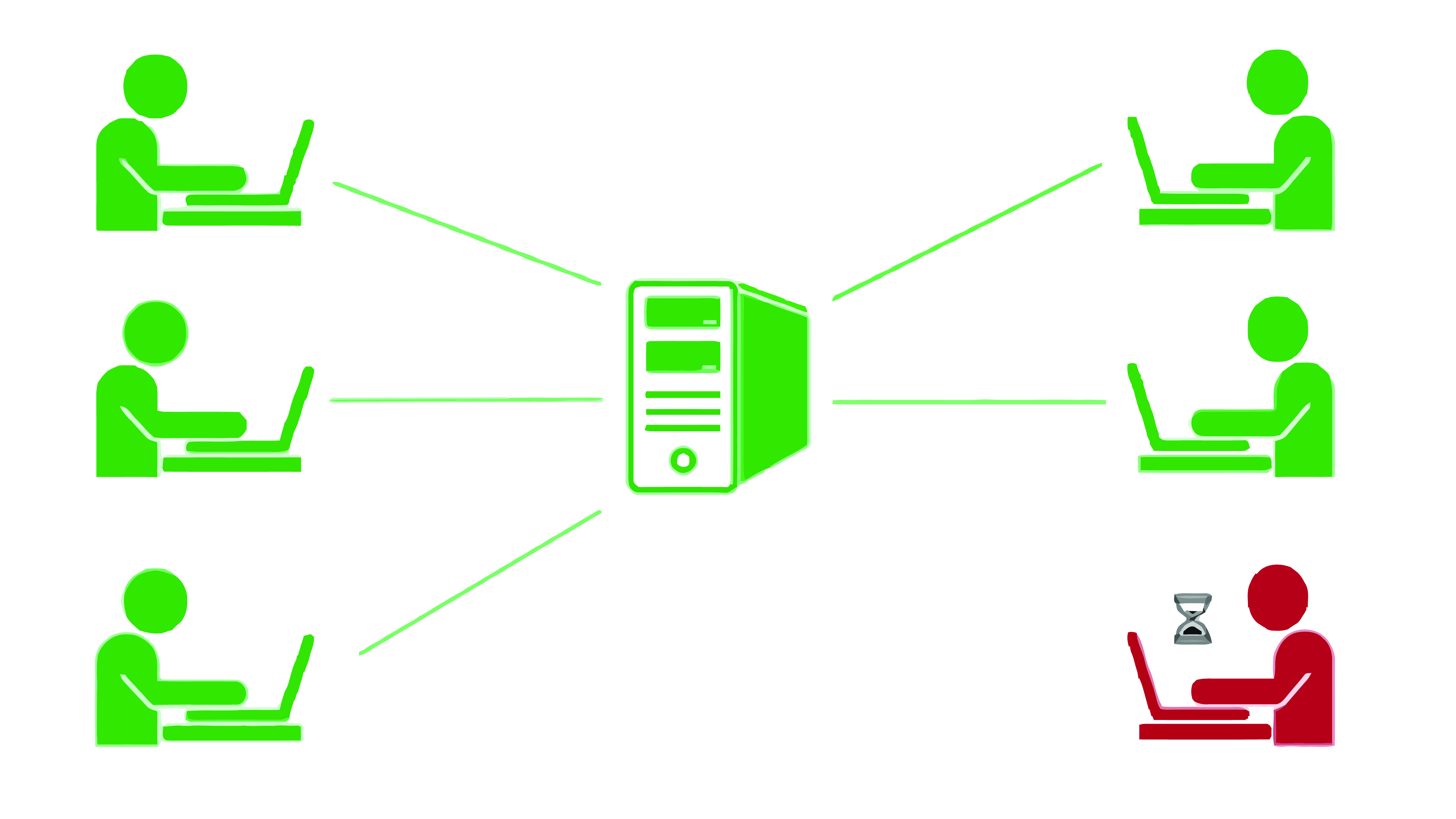
On the other hand, a Concurrent User means a company can authorize a larger number of users to use the intended application/software; but there is a ceiling to the number of users that can access the application/software at the same time. For example, a company purchases 1,000 concurrent licenses for 10,000 employees but only 1,000 users can access the application at any time.
In the following figure of five user concurrent licenses, when five users logged on to the program, it is illegal for the sixth user to login to the program. The sixth user is only allowed to log on once one of the five users logs out.
Capacity-Based Metrics
Every application/software requires a hardware to run at. Instead of sizing the amount of licenses required by the number of users who are going to use the application, a company procures licenses for the capacity of the hardware, number of processors or cores. The number of licenses and price of a license varies per processor/core technology (Model, type, vendor and brand).
Benefits of Knowing our Licenses
Although the owner of licenses makes it difficult for their users to fully understand the licenses usage, we gain a great deal putting the effort reading the fine print, asking questions and learning from others about positive and negative experiences. Here are some of the key benefits that we will gain from understanding our licenses:
• Improve negotiation with license owners
This will maximize our discount when we purchase licenses.
• Reduce License Cost
This will allow us to minimize license consumption and buy only licenses that we need.
• Reduce Maintenance Cost
Maintenance cost is a percentage of the licenses’ purchase cost. Accordingly, if we receive a large discount on the purchase, this will directly lead to a lower maintenance cost.
• Reduce Risk
Proper usage of licenses will minimize risks of audit, unbudgeted fees and possible penalties. Being uncompliant will cost the Company financially, legally and will affect the Company’s image and reputation.