Production in the oil industry goes through three primary stages: Primary oil recovery or “natural recovery,” secondary oil recovery and triple production. Kuwait Oil Company (KOC) gives importance to all of these stages, and even excelled at them thanks to the efforts of its staff and using advanced technologies that have proven feasible and given great results.
The chemical injection in carbonate reservoir is an advanced technique that KOC uses to extract oil from reservoirs. It is a unique experiment that enhanced the company’s efforts to extract oil, increase reserves and boost production sustainability.
‘K-Pulse’ reviews in the following report full details about this technology that falls under the responsibility of the enhanced oil recovery team of KOC’s Planning Group, led by Team Leader Dawood Kamal.
Stages and Techniques
Crude oil is extracted from reservoirs according to three stages: First is the “natural recovery” in which oil is extracted by natural pressure of the reservoir. One of the problems of this stage is that production eventually becomes weak with time, and pressure would need to be increased, and therefore water is injected in the reservoir to increase pressure and maintain production levels. This process is known as “secondary oil recovery;” the second stage of production. Water injection helps displacement of oil from porous spaces. There are several factors that affect displacement, however, such as oil viscosity and rock features.
There are factors that favor using the secondary oil recovery technique, one of which is the presence of water in large quantities from nearby streams, rivers, oceans and wells that are dug in shallow or deep saline aquifers. The low cost of water compared to other materials such as gas serves as another factor.
The third stage of production is the triple production technique, which is also known as enhanced oil recovery. There are three main types of enhanced oil recovery: Thermal recovery, which is done by injecting steam to heat heavy oil in order to reduce its viscosity and allow its easier flow to producing oil wells; Gas injection in which natural gas, nitrogen, or carbon dioxide is injected in the reservoir to mix with oil, making it easier to flow due to the reduction of surface tension between oil and water; and chemical injection in which polymers are injected to increase the pumping efficiency of the injected water. Other chemicals (stimulant or alkaline materials) can also be added to reduce surface tension between oil and water.
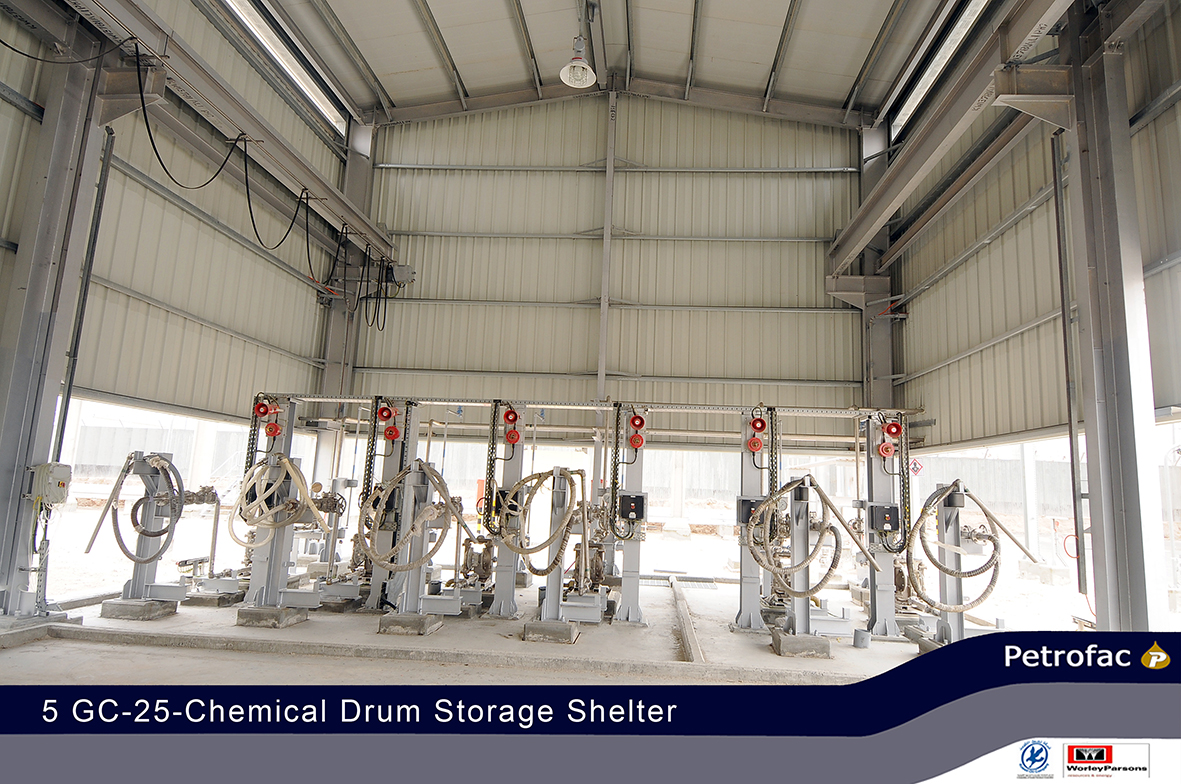
Chemical Injection
In the chemical injection process, the reservoir is injected with chemicals of different structures and for various reasons. The reservoir typically contains gas, water and oil, whereas in some reservoirs oil is found mixed with sand while water would be in the middle, or vice versa; water would be mixed with sand while oil would be in the middle, and that depends on the nature of the reservoir itself. In that case, some of the oil would remain inside the reservoir as a result of the surface tension between oil and water, and would be hard to be extracted without intervention.
In case of water injection, and considering that water has a certain viscosity, sometimes it would not be able to push the remaining oil with high efficiency. Therefore, chemicals are injected, including polymer, which is mixed with water to add to its viscosity and ability to push the oil with high efficiency, thus increasing the ‘sweep efficiency.’
Surfactants are other chemicals that can be used to lower the surface tension between water and oil to help push oil to the wellhead. This method allows for precisely measuring the entire amount of the oil reserve in the reservoir, thus increasing the reserves and achieving production sustainability. Polymer helps push bypassed oil that was not recovered by regular water injection. Polymers are mixed with water to be injected in the reservoir in order to increase pressure, while injecting the surfactant allows for pushing all of the oil outside the reservoir.
Production Sustainability
The triple production technique (enhanced oil recovery) will undoubtedly help maintain the sustainability of KOC’s oil production according to its ambitious plan to produce 3.65 million barrels of water a day by 2020, in accordance with the 2030 Kuwait Petroleum Corporation Strategic Plan. This technique will play an important role in maintaining production sustainability after 2025 and adding new hydrocarbon reserves.
Several studies were conducted to select the triple production methods for KOC reservoirs, and the results indicated that huge hydrocarbon reserves can be added. After that, KOC evaluated several methods to enhance oil recovery, including the injection of low salinity water, gases soluble in oil, and other chemicals that increase production efficiency via a series of studies and primary field applications.
Field Applications
KOC today has several primary field applications for using this advanced technology in various reservoirs, including Sabriya Mawdood, Minagish Oolite, Roudhatain Zoubair, Warah Burgan. These applications are currently going through several stages of development. Meanwhile, KOC is applying the ‘chemical injection’ method in the Sabriya Mawdood reservoir, which yielded successful results in terms of positive testing of new chemicals that are more compatible with the features of the aforementioned reservoir.
The Sabriya Mawdood reservoir is the largest in the North Kuwait region, and thus plays a vital role in achieving those strategic goals. Earlier experiments which were conducted via the single well chemical tracer test method yielded promising results in terms of recovering oil trapped in this reservoir. The chemical tracer test results for three wells were published in 2013 - 2014 under KOC’s patronage, and were praised by technical experts participating in international conferences.
The Sabriya Mawdood reservoir is also distinguished by its carbonic nature, which makes this experiment unique, and makes KOC the first company in the world to apply the enhanced oil recovery technology using chemicals in a carbonic reservoir with this size and level. This experiment officially started during the first quarter of the fiscal year 2017 – 2018, and within two years of the start of injection, a detailed performance evaluation will be conducted in order to apply this technology on a larger scale in line with KOC’s strategic plan. Accordingly, a location was chosen to carry out this experiment which includes implementing, operating and monitoring five points to inject chemicals for enhanced oil recovery in the Sabriya Mawdood reservoir.
Cementing its Leading Position
KOC will continue the field application of this chemical method, with expected positive results that help cement the company’s leading position, and enable the oil industry to overcome concerns over the use of chemical injection to enhance oil recovery in carbonic reservoirs.
Furthermore, a study for the soluble gas (carbon dioxide) method for the Minagish Oolite reservoir was completed jointly with Royal Dutch Shell (Shell), and field application started early 2016. In this field, KOC is cooperating with Kuwait National Petroleum Company (KNPC) to study how to extract carbon dioxide from refineries and using it in enhanced oil recovery according to KPC’s strategy regarding greenhouse gas emissions.
Preliminary laboratory studies were also completed to assess the effectiveness of injection of low salinity water with polymer in the Wara sandstone reservoir in Burgan Field. Evaluating the preliminary results of this application is currently in progress, and field application is expected to start in 2025, as the best method for enhanced oil recovery will be selected to be applied in the wells mentioned above after the test results of primary field applications are evaluated according to technical and economic considerations.
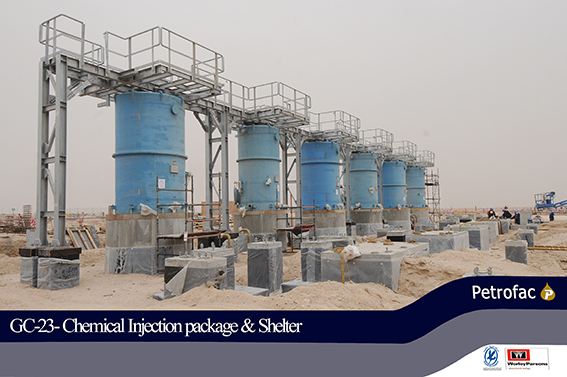
Goals of Enhancement Projects
Enhanced oil recovery projects target the following goals:
1- Meeting delivery deadlines, allocated budgets as well as tasks and roles agreed upon.
2- Evaluating chemical structures used and best designs for wells and the relevant buildings.
3- Reaching reliable and unquestionable results for dealing with potential risks.
4- Improving KOC’s capabilities in project management, lab testing, and the enhanced oil recovery with chemical and gas injection simulation system.
5- Creating a monitoring and inspection system that goes in line with the business objectives.
6- Creating a clear vision about the economic and technical feasibility of applying the aforementioned technology commercially at a large number of wells in the aforementioned reservoirs.
Leadership in Innovation
In this regard, Dawood Kamal, Enhanced Oil Recovery Team Leader at KOC, said that the company leads a great transformation to become a global leader in innovation in enhanced oil recovery experiments, adding that the team embarked in efforts to make KOC’s strategic plans into reality.
Kamal further noted that from a technical standpoint, the Sabriya Mawdood carbonic reservoir includes several opportunities that must be taken advantage of in order to achieve the production results that are directly linked with KOC’s strategy to push production forward. Furthermore, he added that the team is highly driven to achieve higher production and apply this experiment at a larger scale. Therefore, it works restlessly out of its desire to make a successful example out of this experiment, especially that KOC is considered a leader in this field among national, regional and international companies.