Kuwait Oil Company is keen to reach unpreceded production levels which is going to be unachievable if it were not for the loyalty, diligence and commitment at work, in addition to the excellence, technology and keeping the company’s legacy.
The company represented by all its departments, realized that this would be attainable by team work, collaboration, cooperation and unified efforts. Furthermore, the full compliance to QHSE standards and the optimal utilizations of all available resources.
This is exactly what happened in North Kuwait Directorate that implemented the Optimization of Power Distribution Network for North Kuwait (ESPs Phases I & II) Project that contributes in achieving the aggressive targets of the Directorate.
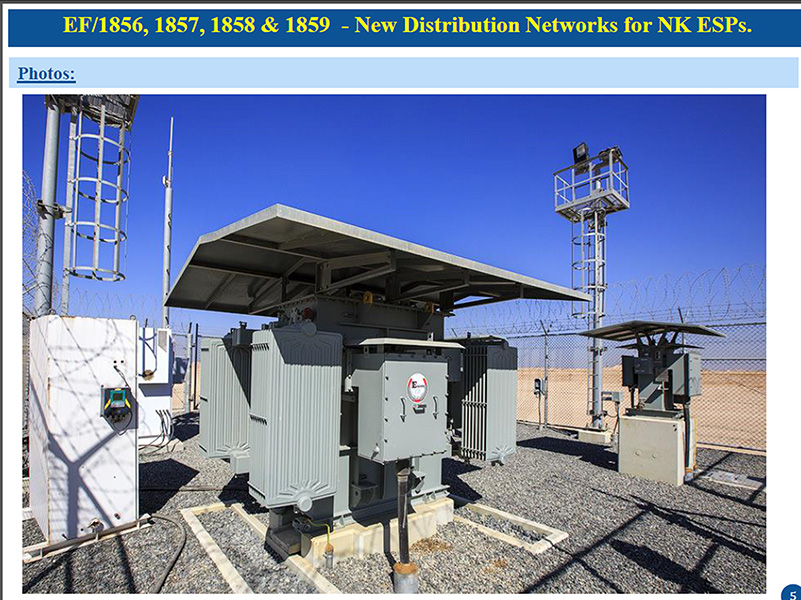
What is behind this project? The following is a glimpse on the project, its objectives and advantages. Furthermore, the Information Team interview TL (Operations Technical Services – NK) Mahdi Al-Qazweeni for a brief review on the team and its vital role in supporting production operations.
Kuwait Oil Company has several oil fields scattered in many locations in State of Kuwait, Sabriyah and Raudhatain are two major oil fields in North Kuwait `in addition to Bahra oil field which is under development phase. The main artificial lift in Sabriyah, Raudhatain & Bahra is ESP (Electrical Submersible Pump). ESP is required to maintain and to increase North Kuwait oil production to meet KOC long-term production target of 1 million BOPD by 2020.
What is Electric Submersible Pump (ESP)?
A submersible pump, or Electric Submersible Pump (ESP), is a device that has a sealed motor close-coupled to the pump body. The whole assembly is submerged in the fluid to be pumped. Submersible pumps are used in oil production to provide a relatively efficient form of “artificial lift” that is able to operate across a broad range of flow rates and depths. By decreasing the pressure at the bottom of the well (by lowering bottom hole flowing pressure, or increasing drawdown), significantly more oil can be produced from the well when compared with natural production. The pumps are typically electrically powered and referred to as Electrical Submersible Pumps (ESP). (Figure-1)
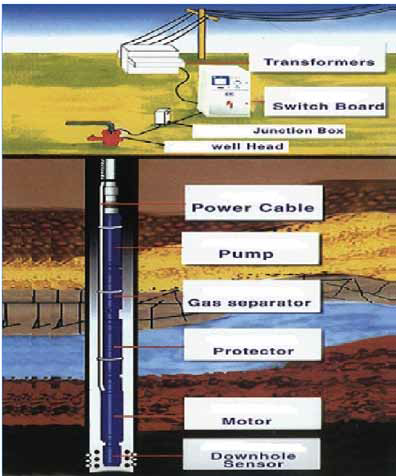
The ESP System – Figure (1)
Overall and Historical Background
Currently, around 794 ESP wells are running in NK, those ESP usually runs on Diesel Generator, which consume a lot of Diesel and required continues monitoring and maintenance. It is important for KOC to provide non-interrupted dedicated electrical power to run all equipment (primarily ESP pumps) of current and future RA, SA and BA wells. This in line with the strategic objective no.1 “Maximize the Strategic Value from Oil” to enhance technical capability and operating capacity of existing substations and accordingly meet targeted future production level.
NK Directorate had established a two-phase plan to connect existing and future ESP wells by electrical power provided by state supply. The 1st phase of “New Distribution Network for North Kuwait ESP” has been completed in 2015 to connected 549 existing wells to MEW. It is planned that more than 1100 ESP wells will be on line to by 2020, which means that more than 600 additional ESP’s wells will require power. (Figure-2)
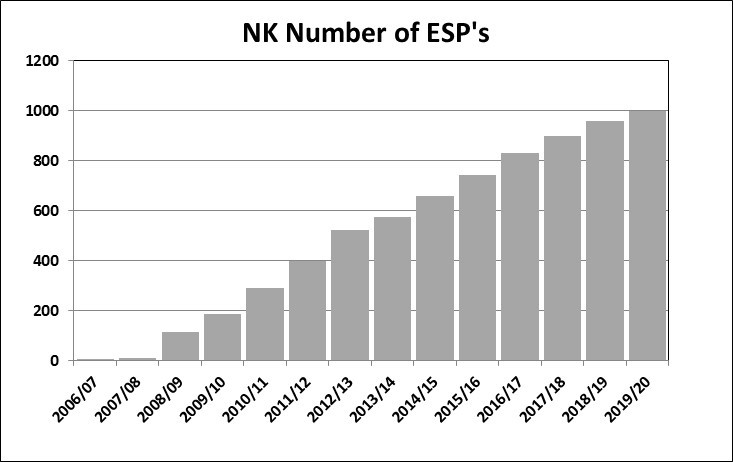
NK forecast – Figure (2)
The First Phase
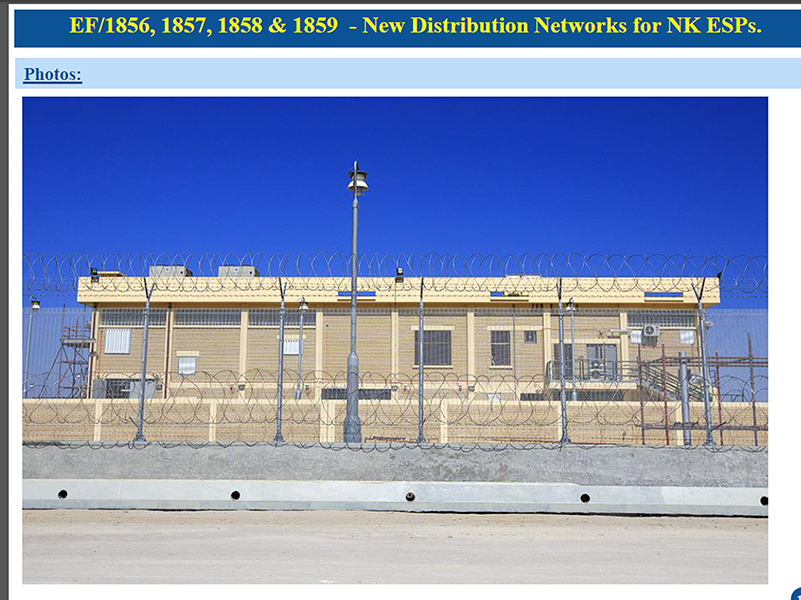
The 1st phase of “New Distribution Network for North Kuwait ESP”, includes the work requirements relating to power distribution networks at Sabriyah (SA) and Raudhatain (RA) Oil Fields in North Kuwait (NK) for supplying the power to the ESP’s for the existing / future proposed oil wells. In addition, it contains the construction of three (3) nos. new Area Substations (SA-A1, RA-B1 & RA-D1). The new substations shall contain all 11KV & 440V electrical control & monitor systems such as switchgears, control panels, E-SCADA …etc along with power cables and control cables connection and termination. In addition to all protection systems such as Earthing, Fire Detection and Alarm, Fire Suppression System, Closed Circuit Television (CCTV) System, Access Control System, Lightning Protection system, etc.
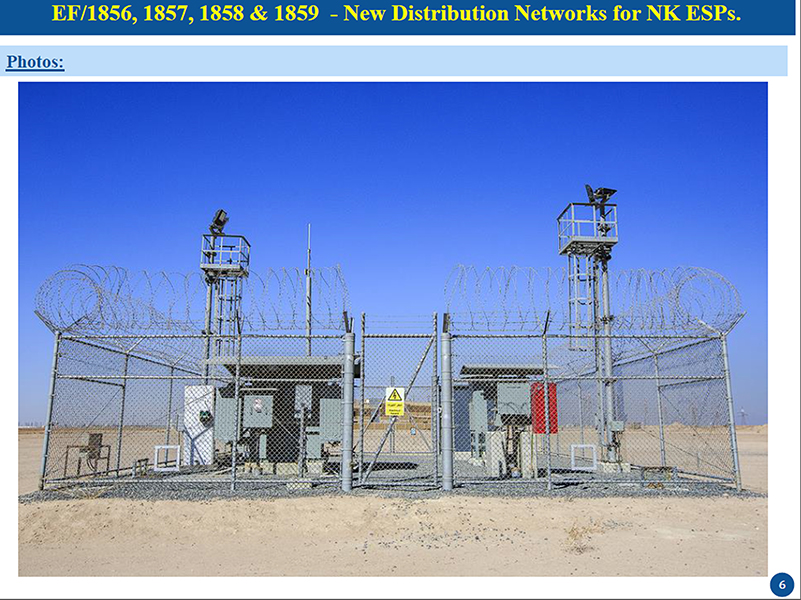
The Second Phase
During the initial design of the 2nd phase it was planned that only 457 wells can be converted to ESPs due to NK power network limitation. However, by optimizing the required ESP loads, re-arranging existing ring circuit and redistribute the existing facilities loads in NK Power Distribution Network, North Kuwait Directorate had achieved to reach 629 wells to be connected to MEW.
The 2nd phase required a construction of two new area Substations to cater for the new 629 ESPs loads, with cablings, lighting system, civil and associated works. This will ensure that the upstream substation has sufficient power and will not exceed the voltage drop and short circuit level.
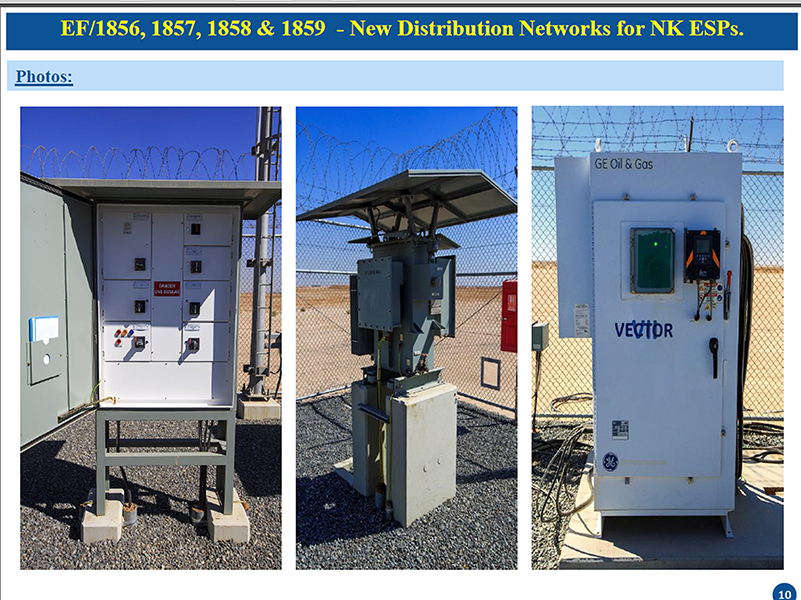
The 2nd phase include an Installation of at least 300 RMUs substation to cater for the upcoming ESPs loads. Power supply / distribution for RMUs where confirmed as per Power study conducted in line with the given location of the subject wells.
The Advantages
The Optimization of NK Power Distribution Network and Implementing a two-phase ESPs Power Connection Project will ensure the availability of permanent power for more 1100 ESP wells and to sustain the long-term production target by maintaining NK production at 1 million BOPD. In addition to that, the optimization and increasing the number of ESP wells that will be fed by a permanent power supply will lead to reduce the time spent on the maintaining and monitoring of the Deasil Generator feeding the existing ESP wells. Moreover, there will be a huge financial and environmental impact due to reducing the consumption of Deasil. In the other hand, the overall system reliability and HSE compliance in line with the Company Business Guidelines.
Al-Qazweeni: NK plays a key role in achieving the strategic objectives of the company
Operations Technical Services (NK) Team is in charge of the Optimization of power Distribution Network Project in NK, and it plays a key role with other departments in enhancing production operations with the directorate.
In this context, TL (OTS –NK) Mahdi Al-Qazweeni touched on the roles and responsibilities of his team, which include the support of Operations Group in maintaining a safe and efficient production from the field. An equally important role is to identify and define developmental projects that support the strategic targets of the Company.
He also added that NK asset has a crucial role in achieving the strategic targets of the Company and the past few years have been extremely challenging due to the changing nature of production streams. Therefore, the team has undertaken numerous measures during this time, comprising new projects such as construction of New GCs and revamp projects for enhancing safety and integrity of facilities. At the same time, it supported execution of modifications in facilities with the objective of enhancing capacity and eliminating bottlenecks. Presence of multidisciplinary experts within the Team means that its role is not limited to process issues only and wide-ranging challenges are tackled such as creation of manifold based gathering system, adopting latest control systems and the enhancement and optimization of electrical power network for ESPs. The team strives to continuously enhance Company operations and make it an efficient, safe workplace of international standards.